On June 19, 2020, the faculty of the Ohio Wesleyan Department of Education wrote an open letter to the president of the American Association of Colleges for Teacher Education urging the association to challenge the Council for the Accreditation of Educator Preparation (CAEP) policy that requires teacher education programs use standardized exams as a measure of academic proficiency when determining admission to teacher education programs. We believe these tests have a history of bias, disadvantaging students of color, students from low-income families, and students with disabilities. Please read the letter here.
Introduction to the Department
Ohio Wesleyan has been educating teachers for more than 100 years. This experience confirms our belief that the most creative and effective teachers are prepared at strong liberal arts colleges such as ours. Our program emphasizes a solid theoretical base and practical experience.
Department Features
From your first course onward, you learn about the responsibilities and rewards of the teaching profession by working directly with students in area schools, community centers, or in Ohio Wesleyan's Early Childhood Center, a laboratory preschool program.
Ohio Wesleyan offers programs preparing students for teacher licensure at the elementary, middle, and high school levels. We also offer licensure in special education.
Available Majors
Adolescence to Young Adult
You can combine a major in Education with a major in English, History, Integrated Science, or Mathematics to prepare you for certification in grades seven to twelve in, respectively, language arts, social studies, science, or mathematics.
The Educational Studies major at OWU is the only education major that does not lead to a teaching license. Rather, students who pursue this major seek to be in an education-related field or have an interest in educational studies, but may not have a desire to teach in a traditional school setting.
OWU's teacher preparation program in Elementary Education is committed to helping you become a knowledgeable, caring, competent professional who is dedicated to nurturing the intellectual, social, and aesthetic growth of children. Your knowledge will be deepened by many opportunities to work directly with children in a wide variety of field and student teaching experiences.
The dual licensure program in Inclusive Elementary Education is committed to helping prospective teachers become knowledgeable, competent, caring professionals who are dedicated to nurturing the intellectual, social, and aesthetic growth of children in both traditional and inclusive PK-5 classroom settings.
Increasingly, school districts need science teachers who are highly qualified to teach across the science curriculum. Students who complete OWU's Integrated Science major will be eligible to earn Adolescent to Young Adult (AYA) Integrated Science Licensure, qualifying them to teach a broad range of science subjects in grades 7 through 12. When you major in Integrated Science for Teachers, you complete classes in life sciences (biology, microbiology, zoology); chemistry; geology and geography; physics and astronomy; and mathematics – along with your education and general course requirements.
This program develops the intellectual, personal, and professional competencies, skills, and dispositions necessary to teach students in grades 4-9 by requiring preservice teachers to successfully complete general liberal arts courses and professional education courses. To provide flexibility and further enhance the teacher's grasp of the interdisciplinary nature of knowledge, two areas of concentration are required. Areas of concentration may be chosen from language arts, mathematics, science, or social studies.
Combine a major in Multi-Age Education with a major in Fine Arts, Spanish, French, or Theatre to prepare you for certification in PreK to grade 12 in that subject.
*If interested in pursuing licensure in German, or Latin, contact the Education Department Chair.
Special education teachers can make a real difference in the lives of their students, and they must have commitment, compassion, focus, and exceptional organizational skills. OWU's major in special education allows you to earn a Multi-Age (grades PreK-12) Intervention Specialist teaching license.
Individuals with undergraduate degrees may earn a teaching license by taking courses full time in one of OWU's undergraduate teacher licensure programs. It typically takes four or five semesters to complete the licensure requirements, including a semester of student teaching.
OWU is people. Brilliant, engaging, passionate, friendly, genuine people. Meet some of them here.
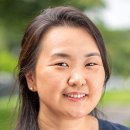
Bona Kang
Assistant Professor of Education
Bona earned a Ph.D. in Cognition and Development in Mathematics from UC Berkeley. Her work primarily focuses on preservice teachers' mathematical learning and development and supporting teacher candidates to develop positive mathematical identities.
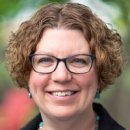
Michele Noble
Assistant Professor of Education
Michele started her career teaching K-8 students with disabilities in Central Ohio. After earning her Ph.D. from The Ohio State University in 2005, she shifted her focus to academia. She has published and presented on topics such as: peer mediated instruction, trauma-informed education, ed tech, and educator preparation.
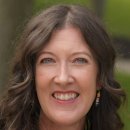
Sarah Kaka
Associate Professor of Education
Sarah taught high school social studies for 10 years prior to shifting to higher education and earning her Ph.D. in Educational Leadership, Research, and Policy. Her main area of focus is secondary social studies. Her research strives to support educator preparation programs in creating effective, long-term educators in all settings, in addition to assisting in-service teachers in becoming more effective.
Jamie Deitz
Assistant Professor of Education
A Good Start
A Good Start School is a five-week, literacy-rich, summer program that helps children adjust to a school atmosphere and learn skills and concepts to help them succeed in kindergarten. With one adult teacher for every five children, students are part of a caring, inviting, and safe learning community. A Good Start School is offered free of charge to eligible families.
Theory-to-Practice in Costa Rica
Through an OWU-sponsored Theory-to-Practice Grant, Education Majors Ali Phillips '16 and Whitney Weadock '16 traveled to Costa Rica to attend the Association for Childhood Education International Conference Spring 2016. They attended sessions about synergy, social innovation, and sustainability inside the classroom while meeting, talking, and learning with educators from around the world. They look forward to connecting their future classrooms to others around the world in order to help their students better understand global citizenship and other cultures.
Department Contact Info
Location
Phillips Hall 214
Ohio Wesleyan University
Delaware, OH 43015

 Department Features